
Category Archives: Blog

What Should Businesses Consider Before Adopting Blockchain

How Voice Ordering Is Reshaping the Hospitality Industry

For some time now, blockchain has been revolutionizing the way we see banking, fintech, digital identity, supply chain management and even the healthcare system. An IBM study which surveyed more than three thousand executives has revealed that at least 80% of respondents are actively using or planning to integrate blockchain technology into their businesses.

Although there still are a lot of companies that continue to rely on traditional, central databases to generate revenue, this technology has gained considerable ground in the last 3-5 years. Moreover, according to Gartner, blockchain is expected to generate an annual business value of more than USD 3 trillion by 2030. The same report shows that 82% of reported blockchain use cases were registered in the financial sector in 2017, yet, the percentage dropped to 46% in 2018.

Nevertheless, more recent statistics indicate that financial services are still considered to be the current and near-term future leader of blockchain, with high potential also seen in industrial products, energy and utilities as well as healthcare.

What is blockchain?

Blockchain has made its public debut in 2008 when Satoshi Nakamoto, whose real identity is still under discussion, released the whitepaper Bitcoin: A Peer to Peer Electronic Cash System. However, the first work on a cryptographically secured chain of blocks was described in 1991 by Stuart Haber and W. Scott Stornetta, two researchers who wanted to implement a system where document timestamps could not be tampered with.

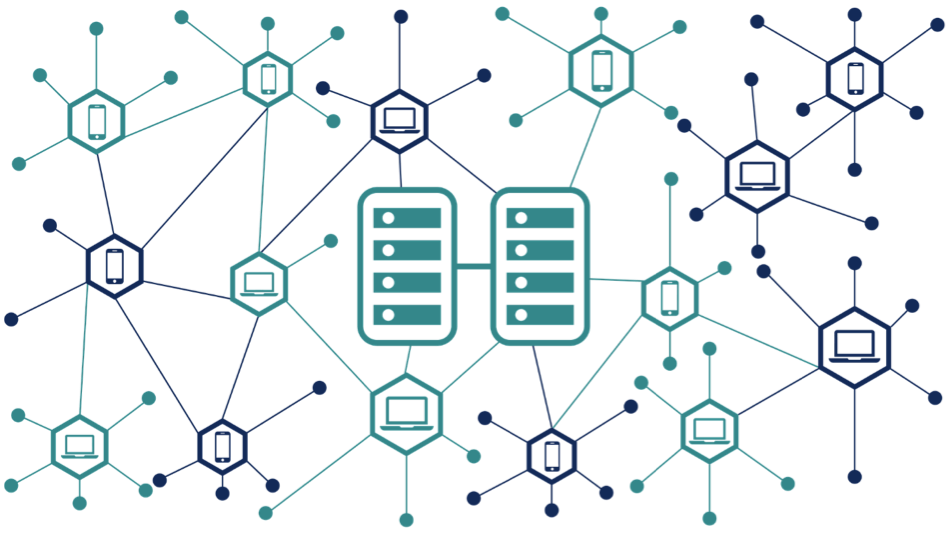
Blockchain is a distributed and public ledger used to record transactions across many computers. Simply put, it is a decentralized saving data structure. The details of the transactions cannot be altered retroactively, without tampering all subsequent records, which actually makes the modification of data really difficult. Even though this is not exactly impossible, so far blockchain has proved to be more secure than other technologies.

Some researchers consider that the way blockchain is used is similar to the internet and that is why they have called it “the internet 3.0”. The technology can be used to develop blockchain applications, including social networks, messengers, games, exchanges, storage platforms, voting systems, prediction markets, online shops and many other.

Main characteristics of the blockchain technology

A blockchain network has a series of characteristics that make it so popular among business owners.

  • Decentralized – it is not owned or controlled by a single entity. Each of the blocks of data is secured and bound to each other using cryptographic principles. All parties involved have a copy of the ledger;
  • Immutable – even though everyone has access to the ledger, no one can tamper with the data that is inside the blockchain;
  • Enhanced security – apart from not being a centralized system, the use of cryptography is another thing that adds an extra protection layer. Every information on the blockchain is hashed cryptographically, which means the information on the network hides the true nature of the data. For this process, any input data gets through a mathematical algorithm that produces a different kind of value, but the length is always fixed;
  • Anonymity – since blockchain transactions are represented as a sequence of numbers, nobody can tell who they belong to;
  • Consensus – a transaction is accepted and recorded on the blockchain as long as all the participants agree to follow the same rules. A transaction will be considered invalid if it violates one of the rules the network agreed upon.

4 aspects businesses should reflect on before adopting blockchain

The blockchain is clearly a great innovation and companies are really hyped about using this technology to enhance their businesses. Blockchain can be used to improve efficiency, secure processes and cut costs by removing unnecessary middlemen. But there are certain aspects that should be considered before jumping in the blockchain bandwagon.

Firstly, before investing in blockchain technology, companies should perform a strategic evaluation of their business model and business needs to see if this is really a good fit. If your company has dependencies on a third-party that sometimes is more of a hassle, blockchain might really help. Of course, this will also depend on the business type and on the area where it is to be implemented.

Yet, in some cases, the challenges a company faces can be solved in other ways that do not involve blockchain, including by reworking several legacy-based solutions.

Secondly, once a decision to go with blockchain has been made, companies need to prepare and follow a strategy that will allow them to leverage the maximum benefits of blockchain technology. Defining a strategy also includes deciding whether to use a public blockchain (where anyone can join and be a part of the network) or a permissioned blockchain (where all those who want to become part of the network must be assessed by the current participants). If your company is not quite ready to handle large amounts of transactions and data, then a permissioned blockchain might be the best approach.

Thirdly, the cost is a significant aspect that has a great impact during the decision-making process. Mainframe, storage and energy costs are the top three things that need to be considered. Energy costs may rise substantially as the transaction volume increases.

Lastly, the effect these changes will have on employees and customers is also an important factor. According to a Juniper Research survey, 35% of companies think that blockchain integration will cause disruption to their internal operations, while 51% feel it will cause a “significant disruption” to their partners and customers. Just think about Bitcoin and the impact it had on people and on the Fintech industry.

Needless to say, blockchain technology has the potential to reshape the existing models. Companies that want to integrate it into their operations need to understand how it works and, more importantly, if it really works for their company.

If you’re a business owner looking to know more about blockchain and whether or not to implement it into your company, get in touch with us and we can help you see how it can benefit your business. We at Expert Network believe that, with the right guidance and the proper tools, any idea can be turned into a successful solution. Your vision, coupled with our extensive knowledge in business areas such as automotive, HORECA, retail & services, all supported by a revolutionary technology such as blockchain, can be the key towards a powerful product.

Share this article on

Let’s connect

Reach your full potential and value. Visit our Careers page.

Machine Learning and the Way Your Business Can Benefit from It

Machine Learning and the Way Your Business Can Benefit from It

Nowadays technologies are definitely changing the whole business context, as Internet did decades ago. Part of these, machine learning has a tremendous impact on the way companies use data, offering them new analytics opportunities, no matter of size or field.

And this is not just a passing wave, it’s actually the future starting to happen now. So, the way every organization, big or small, will learn to ride on the new, rising wave, will be a key factor of their future success or, probably, of their existence itself.

That’s why it’s essential to understand what machine learning has to offer and how businesses of all shapes and sizes can use it to stay competitive and attain tangible value.

AI and ML: Some conceptual clarifications

As artificial intelligence and machine learning are becoming mainstream conversation, the usage of specific terms can be confusing. The two buzzy words do not stand for the same thing, but they are connected.

Artificial intelligence (AI) is an area of computer science, focused on creating intelligent machines able to perform human-like tasks (learn, process natural language, plan, predict, solve problems).

On the other hand, machine learning (ML) is actually a core part of AI, a technique based on creating algorithms that enables the machine to process large volumes of information, find patterns and draw conclusions, also continuously updating outputs as new data becomes available.

In the data-driven era, machine learning can bring immense economic opportunities, providing many specific benefits, no matter the industry.

ML in practice: How Expert Network used it to predict sales and increase turnover

When it comes to using machine learning to it’s best, one very interesting and challenging project for our dev team came from the biggest photo studio network in Europe. The company faced a very irritating problem: how to have an accurate financial plan and reduce management frictions, as every member of the board had their own perspective towards the future and their own predictions.

Developing a custom financial plan with ML help
The main objective was to find and develop an intelligent solution to predict how many photo shooting appointments the company will have in the next financial year. In order to predict future appointments, relevant past data was used as an input. But the records consisted of thousands of items which would have been very hard, nearly impossible, for a person to aggregate into a solution. The option: to use the powerful learning algorithms of Microsoft Azure Machine Learning Studio to process all the numbers and make the needed deductions. After grouping the information with k-means clustering, linear regression algorithm was used to make a prediction for each day of a given month and for every type of appointment. In the end, data regarding prices was added for a complete image of future sales.
Using the ML ability to learn and by continuously updating the data, the Expert Network financial plan could state highly accurate predictions for every future financial year.

The complementary real time marketing tool
Having a custom-made tool to predict sales was a big deal, but determining, in advance, if the financial plan would be reached looked even better. Therefore, a real time marketing tool was developed to disclose how many appointments should have already been booked at a specific moment, in order to reach the planned appointments. The new, complementary solution proved to be extremely important and helpful as the company was able to take measures to correct the deviations from the predicted plan before they happen.

The impact
These machine learning-based solutions enabled the company to use its database to the fullest, transforming figures into predictive and advanced analytics for better business decisions and better results. Expert Network’s financial prediction tool offered a more accurate perspective of the future and reduced frictions on management level. Accordingly, managers could better understand the dynamics of the business and make adequate decisions that translated into operational efficiency and higher level of revenue. The real marketing tool decreased the gap towards the monthly plans, increasing the number of appointments, as well as the total turnover with around 10%-15%.

More ways ML can help businesses

In addition to making better business decisions based on better analytics, machine learning yields even more benefits. We’ve summed up some of them.

Improving customer experience
Machine learning comes with the possibility to personalize experiences, customizing products and services according to the needs. Using vast amount of data, intelligent systems can find trends and make predictions of what customers will wish for next. Also, chatbots and virtual assistants can be successfully employed to provide more informed, convenient and more personal customer interactions.

Taking marketing and sales to the next level
No more intuition-based decisions when it comes to sales. ML-powered models can optimize sales by taking over mundane tasks (sorting leads, monitoring orders, communicating with customers), pinpointing meaningful correlations or automatically adjusting prices to all relevant context conditions. For marketing, ML means creating and delivering highly personalized ads in terms of content, placement and audience. Additionally, the continuous process of gathering data is helping companies benefit from predictive marketing, anticipating needs and making customers more receptive to their marketing campaigns.

Solving security issues
Implementing effective cybersecurity measures powered by ML keeps companies safe from losing sensitive information or having interruptions of the business processes as a result of cyberattacks. Likewise, by identifying patterns in large volumes of performing transactions, ML has an important role in detecting and preventing fraud.

Revolutionizing Human Resources
With ML, businesses can manage a diversity of information on a big scale, have access to relevant insights, analytics and prognosis regarding recruiting needs, career development, staff productivity, training requirements. ML and AI can also assist recruiters in finding the right person for the right job.

The Expert Network use cases are just some examples of how machine learning can drive better results for companies. However, it’s potential is absolutely remarkable. ML opportunities exist in every sector and every core part of any business, being able to improve efficiencies, productivity and profitability.

Every company should explore and test the new opportunities and embed these advanced technologies into their operational environment. Because ML is here to stay and to bring business value.

Interested in making a business upgrade using ML technologies? Let us know your problem and we will let you know our meaningful solution.

Share this article on

Let’s connect

Reach your full potential and value. Visit our Careers page.